Dog Stroller Definition
Source(Google.com.pk)
The domestic dog (Canis lupus familiaris)[2][3] is a subspecies of the gray wolf (Canis lupus), a member of the Canidae family of the mammalian order Carnivora. The term "domestic dog" is generally used for both domesticated and feral varieties. The dog was the first domesticated animal[4] and has been the most widely kept working, hunting, and pet animal in human history. The word "dog" may also mean the male of a canine species,[5] as opposed to the word "bitch" for the female of the species.
MtDNA evidence shows an evolutionary split between the modern dog's lineage and the modern wolf's lineage around 100,000 years ago but, as of 2013, the oldest fossil specimens genetically linked to the modern dog's lineage date to approximately 33,000–36,000 years ago.[4][6] Dogs' value to early human hunter-gatherers led to them quickly becoming ubiquitous across world cultures. Dogs perform many roles for people, such as hunting, herding, pulling loads, protection, assisting police and military, companionship, and, more recently, aiding handicapped individuals. This impact on human society has given them the nickname "man's best friend" in the Western world. In some cultures, however, dogs are also a source of meat.[7][8] In 2001, there were estimated to be 400 million dogs in the world.[9]
Most breeds of dogs are at most a few hundred years old, having been artificially selected for particular morphologies and behaviors by people for specific functional roles. Through this selective breeding, the dog has developed into hundreds of varied breeds, and shows more behavioral and morphological variation than any other land mammal.[10] For example, height measured to the withers ranges from 15.2 centimetres (6.0 in) in the Chihuahua to about 76 cm (30 in) in the Irish Wolfhound; color varies from white through grays (usually called "blue") to black, and browns from light (tan) to dark ("red" or "chocolate") in a wide variation of patterns; coats can be short or long, coarse-haired to wool-like, straight, curly, or smooth.[11] It is common for most breeds to shed this coat.
Contents [hide]
1 Etymology and related terminology
2 Taxonomy
3 History and evolution
3.1 DNA studies
4 Roles with humans
4.1 Early roles
4.2 As pets
4.3 Work
4.4 Sports and shows
4.5 As a food source
4.6 Health risks to humans
4.7 Health benefits for humans
4.8 Shelters
5 Biology
5.1 Senses
5.1.1 Vision
5.1.2 Hearing
5.1.3 Smell
5.2 Physical characteristics
5.2.1 Coat
5.2.2 Tail
5.3 Types and breeds
5.4 Health
5.4.1 Mortality
5.4.2 Predation
5.5 Diet
5.5.1 Foods toxic to dogs
5.6 Reproduction
5.7 Neutering
5.8 Communication
6 Intelligence and behavior
6.1 Intelligence
6.2 Behavior
6.3 Dog growl
7 Differences from wolves
7.1 Physical characteristics
7.2 Behavioral differences
7.3 Trainability
8 Mythology
9 Gallery of dogs in art
10 See also
11 References
12 Bibliography
13 External links
Etymology and related terminology
"Dog" is the common use term that refers to members of the subspecies Canis lupus familiaris (canis, "dog"; lupus, "wolf"; familiaris, "of a household" or "domestic"). The term can also be used to refer to a wider range of related species, such as the members of the genus Canis, or "true dogs", including the wolf, coyote, and jackals, or it can refer to the members of the tribe Canini, which would also include the African wild dog, or it can be used to refer to any member of the family Canidae, which would also include the foxes, bush dog, raccoon dog, and others.[12] Some members of the family have "dog" in their common names, such as the raccoon dog and the African wild dog. A few animals have "dog" in their common names but are not canids, such as the prairie dog.
The English word "dog" comes from Middle English dogge, from Old English docga, a "powerful dog breed".[13] The term may possibly derive from Proto-Germanic *dukkōn, represented in Old English finger-docce ("finger-muscle").[14] The word also shows the familiar petname diminutive -ga also seen in frogga "frog", picga "pig", stagga "stag", wicga "beetle, worm", among others.[15] Due to the archaic structure of the word, the term dog may ultimately derive from the earliest layer of Proto-Indo-European vocabulary, reflecting the role of the dog as the earliest domesticated animal.[16]
In 14th-century England, "hound" (from Old English: hund) was the general word for all domestic canines, and "dog" referred to a subtype of hound, a group including the mastiff. It is believed this "dog" type of "hound" was so common, it eventually became the prototype of the category "hound".[17] By the 16th century, dog had become the general word, and hound had begun to refer only to types used for hunting.[18] Hound, cognate to German Hund, Dutch hond, common Scandinavian hund, and Icelandic hundur, is ultimately derived from the Proto-Indo-European *kwon- "dog", found in Sanskrit kukuur (कुक्कुर),[19] Welsh ci (plural cwn), Latin canis, Greek kýōn, and Lithuanian šuõ.[20]
In breeding circles, a male canine is referred to as a dog, while a female is called a bitch (Middle English bicche, from Old English bicce, ultimately from Old Norse bikkja). A group of offspring is a litter. The father of a litter is called the sire, and the mother is called the dam. Offspring are, in general, called pups or puppies, from French poupée, until they are about a year old. The process of birth is whelping, from the Old English word hwelp (cf. German Welpe, Dutch welp, Swedish valpa, Icelandic hvelpur).[21] The term "whelp" can also be used to refer to the young of any canid, or as a (somewhat archaic) alternative to "puppy".
Taxonomy
In 1753, the father of modern biological taxonomy, Carl Linnaeus, listed among the types of quadrupeds familiar to him, the Latin word for dog, canis. Among the species within this genus, Linnaeus listed the fox, as Canis vulpes, wolves (Canis lupus), and the domestic dog, (Canis canis; see File:Linnaeus - Regnum Animale (1735).png).
In later editions, Linnaeus dropped Canis canis and greatly expanded his list of the Canis genus of quadrupeds, and by 1758 included alongside the foxes, wolves, and jackals and many more terms that are now listed as synonyms for domestic dog, including aegyptius (hairless dog), aquaticus, (water dog), and mustelinus (literally "badger dog"). Among these were two that later experts have been widely used for domestic dogs as a species: Canis domesticus and, most predominantly, Canis familiaris, the "common" or "familiar" dog.[22]
The domestic dog was accepted as a species in its own right until overwhelming evidence from behavior, vocalizations, morphology, and molecular biology led to the contemporary scientific understanding that a single species, the gray wolf, is the common ancestor for all breeds of domestic dogs.[23][24][25] In recognition of this fact, the domestic dog was reclassified in 1993 as Canis lupus familiaris, a subspecies of the gray wolf Canis lupus, by the Smithsonian Institution and the American Society of Mammalogists. C. l. familiaris is listed as the name for the taxon that is broadly used in the scientific community and recommended by ITIS, although Canis familiaris is a recognised synonym.[26]
Since that time, C. domesticus and all taxa referring to domestic dogs or subspecies of dog listed by Linnaeus, Johann Friedrich Gmelin in 1792, and Christian Smith in 1839, lost their subspecies status and have been listed as taxonomic synonyms for Canis lupus familiaris.[27]
History and evolution
Main articles: Origin of the domestic dog and Gray wolf
Ancient Greek rhyton in the shape of a dog's head, made by Brygos, early 5th century BC. Jérôme Carcopino Museum, Department of Archaeology, Aleria
Domestic dogs inherited complex behaviors from their wolf ancestors, which would have been pack hunters with complex body language. These sophisticated forms of social cognition and communication may account for their trainability, playfulness, and ability to fit into human households and social situations, and these attributes have given dogs a relationship with humans that has enabled them to become one of the most successful species on the planet today.[23]
Although experts largely disagree over the details of dog domestication, it is agreed that human interaction played a significant role in shaping the subspecies.[28] Domestication may have occurred initially in separate areas, particularly Siberia and Europe. Currently it is thought domestication of our current lineage of dog occurred sometime as early as 15,000 years ago and arguably as late as 8500 years ago. Shortly after the latest domestication, dogs became ubiquitous in human populations, and spread throughout the world.
Emigrants from Siberia likely crossed the Bering Strait with dogs in their company, and some experts[29] suggest the use of sled dogs may have been critical to the success of the waves that entered North America roughly 12,000 years ago,[29] although the earliest archaeological evidence of dog-like canids in North America dates from about 9,400 years ago.[30][31] Dogs were an important part of life for the Athabascan population in North America, and were their only domesticated animal. Dogs also carried much of the load in the migration of the Apache and Navajo tribes 1,400 years ago. Use of dogs as pack animals in these cultures often persisted after the introduction of the horse to North America.[32][page needed]
The current consensus among biologists and archaeologists is that the dating of first domestication is indeterminate,[28][32] although more recent evidence shows isolated domestication events as early as 33,000 years ago.[33][34] There is conclusive evidence the present lineage of dogs genetically diverged from their wolf ancestors at least 15,000 years ago,[35][36][37][38][39] but some believe domestication to have occurred earlier.[28] Evidence is accruing that there were previous domestication events, but that those lineages died out.[40]
It is not known whether humans domesticated the wolf as such to initiate dog's divergence from its ancestors, or whether dog's evolutionary path had already taken a different course prior to domestication. For example, it is hypothesized that some wolves gathered around the campsites of paleolithic camps to scavenge refuse, and associated evolutionary pressure developed that favored those who were less frightened by, and keener in approaching, humans.
Tesem, an old Egyptian sighthound-like dog.
The bulk of the scientific evidence for the evolution of the domestic dog stems from morphological studies of archaeological findings and mitochondrial DNA studies. The divergence date of roughly 15,000 years ago is based in part on archaeological evidence that demonstrates the domestication of dogs occurred more than 15,000 years ago,[23][32] and some genetic evidence indicates the domestication of dogs from their wolf ancestors began in the late Upper Paleolithic close to the Pleistocene/Holocene boundary, between 17,000 and 14,000 years ago.[41] But there is a wide range of other, contradictory findings that make this issue controversial.[citation needed] There are findings beginning currently at 33,000 years ago distinctly placing them as domesticated dogs evidenced not only by shortening of the muzzle but widening as well as crowding of teeth.
Archaeological evidence suggests that the latest point at which dogs could have diverged from wolves was roughly 15,000 years ago, although it is possible they diverged much earlier.[23] In 2008, a team of international scientists released findings from an excavation at Goyet Cave in Belgium declaring a large, toothy canine existed 31,700 years ago and ate a diet of horse, musk ox and reindeer.[42]
Prior to this Belgian discovery, the earliest dog bones found were two large skulls from Russia and a mandible from Germany dated from roughly 14,000 years ago.[23][37] Remains of smaller dogs from Natufian cave deposits in the Middle East, including the earliest burial of a human being with a domestic dog, have been dated to around 10,000 to 12,000 years ago.[37][43] There is a great deal of archaeological evidence for dogs throughout Europe and Asia around this period and through the next two thousand years (roughly 8,000 to 10,000 years ago), with specimens uncovered in Germany, the French Alps, and Iraq, and cave paintings in Turkey.[23] The oldest remains of a domesticated dog in the Americas were found in Texas and have been dated to about 9,400 years ago.[44]
DNA studies
A young male border terrier with a raccoon toy.
DNA studies have provided a wide range of possible divergence dates, from 15,000 to 40,000 years ago,[37] to as much as 100,000 to 140,000 years ago.[45] These results depend on a number of assumptions.[23] Genetic studies are based on comparisons of genetic diversity between species, and depend on a calibration date. Some estimates of divergence dates from DNA evidence use an estimated wolf-coyote divergence date of roughly 700,000 years ago as a calibration.[46] If this estimate is incorrect, and the actual wolf-coyote divergence is closer to one or two million years ago, or more,[47] then the DNA evidence that supports specific dog-wolf divergence dates would be interpreted very differently.
Furthermore, it is believed the genetic diversity of wolves has been in decline for the last 200 years, and that the genetic diversity of dogs has been reduced by selective breeding. This could significantly bias DNA analyses to support an earlier divergence date. The genetic evidence for the domestication event occurring in East Asia is also subject to violations of assumptions. These conclusions are based on the location of maximal genetic divergence, and assume hybridization does not occur, and that breeds remain geographically localized. Although these assumptions hold for many species, there is good reason to believe that they do not hold for canines.[23]
Genetic analyses indicate all dogs are likely descended from a handful of domestication events with a small number of founding females,[23][41] although there is evidence domesticated dogs interbred with local populations of wild wolves on several occasions.[37] Data suggest dogs first diverged from wolves in East Asia, and these domesticated dogs then quickly migrated throughout the world, reaching the North American continent around 8000 BC.[37] The oldest groups of dogs, which show the greatest genetic variability and are the most similar to their wolf ancestors, are primarily Asian and African breeds, including the Basenji, Lhasa Apso, and Siberian Husky.[48] Some breeds thought to be very old, such as the Pharaoh Hound, Ibizan Hound, and Norwegian Elkhound, are now known to have been created more recently.[48]
A great deal of controversy surrounds the evolutionary framework for the domestication of dogs.[23] Although it is widely claimed that "man domesticated the wolf,"[49] man may not have taken such a proactive role in the process.[23] The nature of the interaction between man and wolf that led to domestication is unknown and controversial. At least three early species of the Homo genus began spreading out of Africa roughly 400,000 years ago, and thus lived for a considerable time in contact with canine species.[23]
Despite this, there is no evidence of any adaptation of canine species to the presence of the close relatives of modern man. If dogs were domesticated, as believed, roughly 15,000 years ago, the event (or events) would have coincided with a large expansion in human territory and the development of agriculture. This has led some biologists to suggest one of the forces that led to the domestication of dogs was a shift in human lifestyle in the form of established human settlements. Permanent settlements would have coincided with a greater amount of disposable food and would have created a barrier between wild and anthropogenic canine populations.[23]
Roles with humans
A Siberian Husky used as a pack animal
Early roles
Wolves, and their dog descendants, would have derived significant benefits from living in human camps—more safety, more reliable food, lesser caloric needs, and more chance to breed.[50] They would have benefited from humans' upright gait that gives them larger range over which to see potential predators and prey, as well as color vision that, at least by day, gives humans better visual discrimination.[50] Camp dogs would also have benefitted from human tool use, as in bringing down larger prey and controlling fire for a range of purposes.[50]
Humans would also have derived enormous benefit from the dogs associated with their camps.[51] For instance, dogs would have improved sanitation by cleaning up food scraps.[51] Dogs may have provided warmth, as referred to in the Australian Aboriginal expression "three dog night" (an exceptionally cold night), and they would have alerted the camp to the presence of predators or strangers, using their acute hearing to provide an early warning.[51]
Anthropologists believe the most significant benefit would have been the use of dogs' sensitive sense of smell to assist with the hunt.[51] The relationship between the presence of a dog and success in the hunt is often mentioned as a primary reason for the domestication of the wolf, and a 2004 study of hunter groups with and without a dog gives quantitative support to the hypothesis that the benefits of cooperative hunting was an important factor in wolf domestication.[52]
The cohabitation of dogs and humans would have greatly improved the chances of survival for early human groups, and the domestication of dogs may have been one of the key forces that led to human success.[53]
Couple sitting on the lawn with a pet British Bulldog
A British Bulldog shares a day at the park.
As pets
Pugs are one of the most popular toy dogs
"The most widespread form of interspecies bonding occurs between humans and dogs"[51] and the keeping of dogs as companions, particularly by elites, has a long history.[54] However, pet dog populations grew significantly after World War II as suburbanization increased.[54] In the 1950s and 1960s, dogs were kept outside more often than they tend to be today[55] (using the expression "in the doghouse" to describe exclusion from the group signifies the distance between the doghouse and the home) and were still primarily functional, acting as a guard, children's playmate, or walking companion. From the 1980s, there have been changes in the role of the pet dog, such as the increased role of dogs in the emotional support of their owners.[56] People and dogs have become increasingly integrated and implicated in each other's lives,[57] to the point where pet dogs actively shape the way a family and home are experienced.[58]
There have been two major trends in the changing status of pet dogs. The first has been the 'commodification' of the dog, shaping it to conform to human expectations of personality and behaviour.[58] The second has been the broadening of the concept of the family and the home to include dogs-as-dogs within everyday routines and practices.[58]
There are a vast range of commodity forms available to transform a pet dog into an ideal companion.[59] The list of goods, services and places available is enormous: from dog perfumes, couture, furniture and housing, to dog groomers, therapists, trainers and care-takers, dog cafes, spas, parks and beaches, and dog hotels, airlines and cemeteries.[59] While dog training as an organized activity can be traced back to the 18th century, in the last decades of the 20th century it became a high profile issue as many normal dog behaviors such as barking, jumping up, digging, rolling in dung, fighting, and urine marking[further explanation needed] became increasingly incompatible with the new role of a pet dog.[60] Dog training books, classes and television programs proliferated as the process of commodifying the pet dog continued.[61]
An Australian Cattle Dog in reindeer antlers sits on Santa's lap
A pet dog taking part in Christmas traditions
The majority of contemporary dog owners describe their dog as part of the family,[58] although some ambivalence about the relationship is evident in the popular reconceptualization of the dog-human family as a pack.[58] A dominance model of dog-human relationships has been promoted by some dog trainers, such as on the television program Dog Whisperer. However it has been disputed that "trying to achieve status" is characteristic of dog–human interactions.[62] Pet dogs play an active role in family life; for example, a study of conversations in dog-human families showed how family members use the dog as a resource, talking to the dog, or talking through the dog, to mediate their interactions with each other.[63]
Another study of dogs' roles in families showed many dogs have set tasks or routines undertaken as family members, the most common of which was helping with the washing-up by licking the plates in the dishwasher, and bringing in the newspaper from the lawn.[58] Increasingly, human family members are engaging in activities centered on the perceived needs and interests of the dog, or in which the dog is an integral partner, such as Dog Dancing and Doga.[59]
According to the statistics published by the American Pet Products Manufacturers Association in the National Pet Owner Survey in 2009–2010, it is estimated there are 77.5 million dog owners in the United States.[64] The same survey shows nearly 40% of American households own at least one dog, of which 67% own just one dog, 25% two dogs and nearly 9% more than two dogs. There does not seem to be any gender preference among dogs as pets, as the statistical data reveal an equal number of female and male dog pets. Yet, although several programs are undergoing to promote pet adoption, less than a fifth of the owned dogs come from a shelter.
Work
Dogs have lived and worked with humans in so many roles that they have earned the unique nickname, "man's best friend",[65] a phrase used in other languages as well. They have been bred for herding livestock,[66] hunting (e.g. pointers and hounds),[67] rodent control,[3] guarding, helping fishermen with nets, detection dogs, and pulling loads, in addition to their roles as companions.[3]
Book of the Hunt, Gaston III, Count of Foix, 1387–88.
Service dogs such as guide dogs, utility dogs, assistance dogs, hearing dogs, and psychological therapy dogs provide assistance to individuals with physical or mental disabilities.[68][69] Some dogs owned by epileptics have been shown to alert their handler when the handler shows signs of an impending seizure, sometimes well in advance of onset, allowing the owner to seek safety, medication, or medical care.[70]
Dogs included in human activities in terms of helping out humans are usually called working dogs. Dogs of several breeds are considered working dogs. Some working dog breeds include Akita, Alaskan Malamute, Anatolian Shepherd Dog, Bernese Mountain Dog, Black Russian Terrier, Boxer, Bullmastiff, Doberman Pinscher, Dogue de Bordeaux, German Pinscher, German Shepherd,[71] Giant Schnauzer, Great Dane, Great Pyrenees, Great Swiss Mountain Dog, Komondor, Kuvasz, Mastiff, Neapolitan Mastiff, Newfoundland, Portuguese Water Dog, Rottweiler, Saint Bernard, Samoyed, Siberian Husky, Standard Schnauzer, and Tibetan Mastiff.
Sports and shows
See also: Conformation show
Owners of dogs often enter them in competitions[72] such as breed conformation shows or sports, including racing, sledding and agility competitions.
In conformation shows, also referred to as breed shows, a judge familiar with the specific dog breed evaluates individual purebred dogs for conformity with their established breed type as described in the breed standard. As the breed standard only deals with the externally observable qualities of the dog (such as appearance, movement, and temperament), separately tested qualities (such as ability or health) are not part of the judging in conformation shows.
Dog Stroller Latest Dog Images Photos Pictures Wallpapers 2013 
Dog Stroller Latest Dog Images Photos Pictures Wallpapers 2013 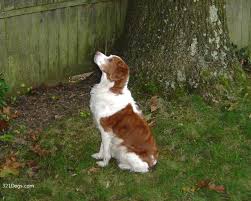
Dog Stroller Latest Dog Images Photos Pictures Wallpapers 2013 
Dog Stroller Latest Dog Images Photos Pictures Wallpapers 2013 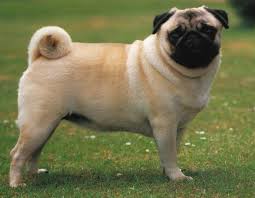
Dog Stroller Latest Dog Images Photos Pictures Wallpapers 2013 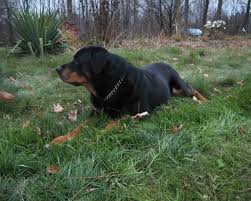
Dog Stroller Latest Dog Images Photos Pictures Wallpapers 2013 
Dog Stroller Latest Dog Images Photos Pictures Wallpapers 2013 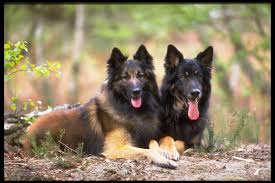
Dog Stroller Latest Dog Images Photos Pictures Wallpapers 2013 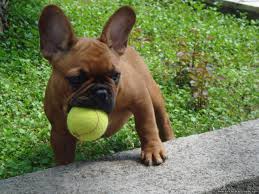
Dog Stroller Latest Dog Images Photos Pictures Wallpapers 2013 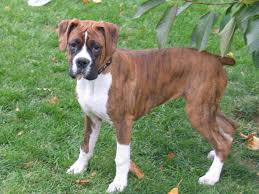
Dog Stroller Latest Dog Images Photos Pictures Wallpapers 2013 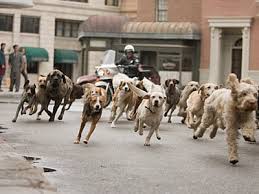
Dog Stroller Latest Dog Images Photos Pictures Wallpapers 2013

No comments:
Post a Comment